

Understanding the IRS Tax Loophole of 2026
The IRS tax loophole anticipated to become legal in 2026 presents significant opportunities for individuals and businesses seeking to minimize their tax liabilities. This loophole primarily revolves around the formation and strategic use of Limited Liability Companies (LLCs), which serve as powerful tools for reducing taxable income while remaining compliant with existing tax regulation.
At its core, the loophole allows specific types of income to be shielded from taxation, primarily benefiting high earners and small business owners who can leverage the advantages offered by LLC structures. By establishing an LLC, business owners can categorize income in a manner that potentially reduces overall tax rates. This means that profits earned through an LLC may be less susceptible to higher personal income tax rates that typically burden individual earners.
Moreover, the intended use of LLCs extends beyond mere income categorization; it includes the ability to deduct certain business expenses that are otherwise not available to sole proprietors. For instance, expenses related to business operations, such as travel, equipment purchases, and even certain personal expenditures when documented correctly, can be deducted. This deduction capability makes LLCs particularly attractive to entrepreneurs who seek to increase their net income while adhering to IRS regulations.
As we approach 2026, the significance of understanding this loophole cannot be overstated. It not only offers individuals and small businesses strategies to mitigate their tax burden but also emphasizes the necessity of tax planning in response to evolving IRS policies. Individuals taking full advantage of these changes can lower their tax obligations significantly, paving the way for healthier financial outcomes and sustained business growth.
Legally Tax-Free starts with a Total Financial Audit.
You can’t take advantage of 2026 tax loopholes if you don’t know where your money is going. Before you can apply the strategies I used, you must find your “baseline.”
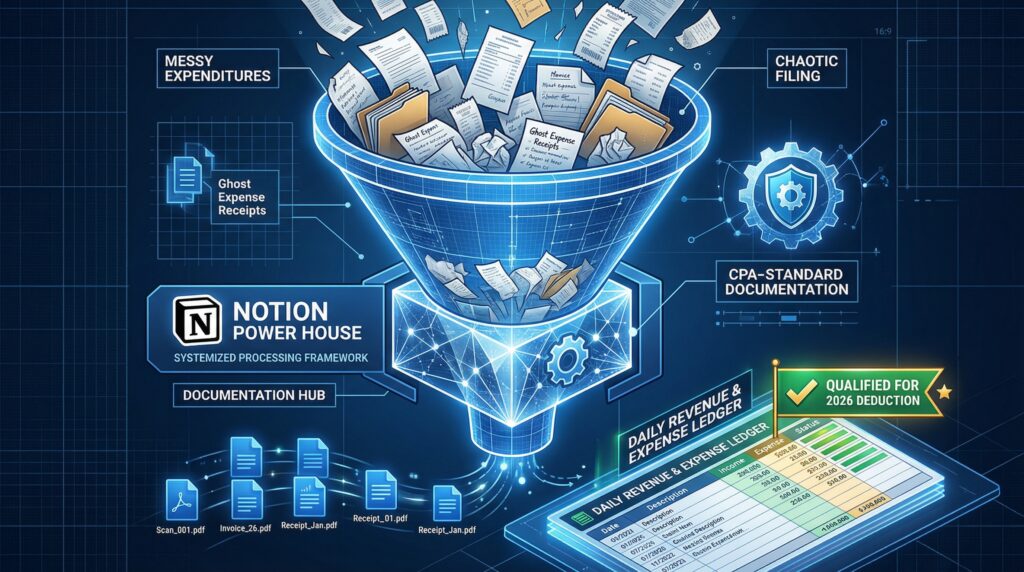
I’m giving you my Audit Quick-Start Bundle for FREE. Use the Audit Calculator and the PDF Audit Blueprint to strip away the “Ghost Expenses” and financial clutter. It’s the exact first step I took to restructure my income and reach a tax-free status.
[Download the Free Audit Bundle & Start Your Audit]
Legal Tax-Free Strategies to Maximize Savings
As we move towards the anticipated tax regulations of 2026, taking advantage of legal tax-free strategies can significantly enhance your savings. One particularly potent strategy is the Backdoor Roth IRA, which allows individuals to contribute to a Roth IRA even if their income exceeds the eligibility limits. This method involves making a nondeductible contribution to a Traditional IRA, followed by a conversion to a Roth IRA. The advantage here is that once the funds are in the Roth, they grow tax-free, and withdrawals during retirement are also tax-free. This strategy is especially beneficial for high earners looking to maximize their tax-free income in retirement.
Another effective strategy is the utilization of Health Savings Accounts (HSAs). HSAs provide triple tax benefits: contributions are tax-deductible, the account grows tax-deferred, and withdrawals for qualified medical expenses are tax-free. For 2026, maximizing contributions to an HSA can significantly reduce taxable income while providing a means to cover future medical costs without incurring tax liabilities. It’s crucial to keep track of contribution limits, as they increase annually, allowing for even greater tax savings over time.
Municipal bonds also serve as a viable option for those seeking tax-free investment avenues. Interest earned on municipal bonds is generally exempt from federal income tax, and in some cases, state and local taxes as well. Investing in these bonds can yield a stable income stream without the burden of tax consequences, making them an attractive choice for investors looking to preserve wealth.
Implementing these legal tax-free strategies can effectively reduce taxable income, promote financial growth, and ensure more of your hard-earned money remains with you. As 2026 approaches, awareness and strategic planning around these methods could provide substantial long-term benefits.
Deductions and Credits to Consider for Tax-Free Status
Taxpayers often seek avenues to minimize their tax burdens, and understanding available deductions and credits can be instrumental in achieving a tax-free status. Among the most notable deductions is the Self Employment Tax Deduction. This deduction is particularly advantageous for self-employed individuals, allowing them to deduct a portion of the self-employment taxes they must pay, thereby potentially lowering their overall taxable income.
Another significant consideration is the Qualified Business Income (QBI) deduction extension. Under current provisions, this deduction permits eligible business owners to deduct up to 20% of their qualified business income, subject to certain limitations. The extension of this deduction aims to support small and medium-sized enterprises, enabling them to retain more earnings and foster economic growth. Taxpayers should closely monitor any modifications to the criteria surrounding the QBI deduction leading up to 2026.
As 2026 approaches, taxpayers should also be aware of planned changes regarding Itemized deductions. Various deductions, including those related to medical expenses, state and local taxes, and mortgage interest, will continue to evolve. Understanding these parameters is crucial in taking advantage of available deductions that align with personal financial situations.
Furthermore, it is essential to stay informed about emerging tax credits that may become available in 2026. Tax credits, unlike deductions, directly reduce the tax owed, thereby offering more robust savings opportunities. Each year, the IRS updates available credits, and knowledge of these changes can provide taxpayers with strategic advantages in tax planning.
In summary, leveraging various deductions and credits is a vital strategy for individuals seeking tax-free status. By fully understanding the Self Employment Tax Deduction, the QBI deduction extension, and potential changes to Itemized deductions, taxpayers can strategically enhance their financial positions.
Future Tax Planning Strategies
As we look beyond 2026, developing effective tax planning strategies becomes pivotal in navigating potential changes in tax regulations and maximizing financial efficiency. The focus will shift towards offshore tax strategies and audit-proof tax hacks that could allow individuals and businesses to legally minimize their tax liabilities. With the IRS consistently reviewing and updating its regulations, it becomes essential to stay informed and adapt to potential shifts that could impact your tax situation.
One strategy that may be beneficial post-2026 is partnership basis shifting. This approach involves adjusting the basis of partnership interests, potentially allowing for more favorable tax treatment upon liquidation or transfer. Understanding the intricacies of basis allocation could aid in crafting a strategy that minimizes taxable income while still optimizing returns.
Additionally, the 401(k) mega backdoor is a powerful tool worth exploring in the future tax landscape. By allowing individuals to make after-tax contributions to their 401(k) plans and subsequently converting them into Roth accounts, this strategy can significantly enhance retirement savings while potentially avoiding hefty tax liabilities on investment gains.
Furthermore, with ongoing discussions regarding charitable donation limits, strategic charitable giving may also become a cornerstone of effective tax planning. Donations not only serve philanthropic purposes but can provide substantial deductions that minimize taxable income. As regulations evolve, understanding how to best leverage charitable contributions will be crucial for long-term financial planning.
Overall, adopting a proactive approach to future tax planning strategies allows individuals to capitalize on available opportunities, navigate potential challenges, and ensure compliance with emerging IRS regulations effectively. Engaging with tax professionals to tailor strategies to specific financial goals will only further enhance the efficacy of these planning initiatives.
The Difference Between a ‘Loophole’ and an Audit is Documentation.”
The IRS doesn’t just want to know what you claimed; they want to see the systems behind it. I stayed tax-free in 2026 because my documentation was bulletproof. The 5-in-1 Professional Engine Room is the exact infrastructure I use to stay compliant and profitable.
Secure your tax-free status with:
1. Ghost Audit Tracker (Spreadsheet): The “Subscription Hunter.” This automated engine scans your spending to find and “exorcise” hidden subscriptions and phantom expenses that are quietly draining your wealth.
2. Daily Revenue & Expense Tracker: Your high-precision ledger. Designed for the 2026 tax environment, it automates profit tracking so you can watch your $500/day goal become a documented reality.
3. Notion Command Centre: The “Digital Power House.” Centralize your entire business life—from tax-saving documents to your 2026 crypto portfolio strategy—in one secure, professional vault.
4. Wealth Shift PDF Guide: The Strategic Manual. My personal “Slash-and-Burn” protocol for navigating new tax laws and shifting from a “side-hustler” to a high-net-worth business owner.
5. Professional Invoice Generator: The “Authority Builder.” (The code we just perfected!) Build trust with clients by generating high-precision, CPA-standard invoices that get you paid faster and keep your records audit-proof.